The Silk Road Collection III

Coins of Legend and Legacy

An extraordinary journey through the Silk Road Collection, where each coin is not merely a currency but a glimpse into the intricate network of empires, cultures, and civilizations that once spanned the ancient world. From the ancient Persian Empire to the distant realms of China, these coins serve as timeless artifacts, speaking to the wealth, power, and ambitions of the rulers who issued them.
- Go to the auction -

HIGHLIGHTS AND CURIOSITIES

Persia Acheimenid or Alexandrine Empire

Persia – The Beginnings of Currency

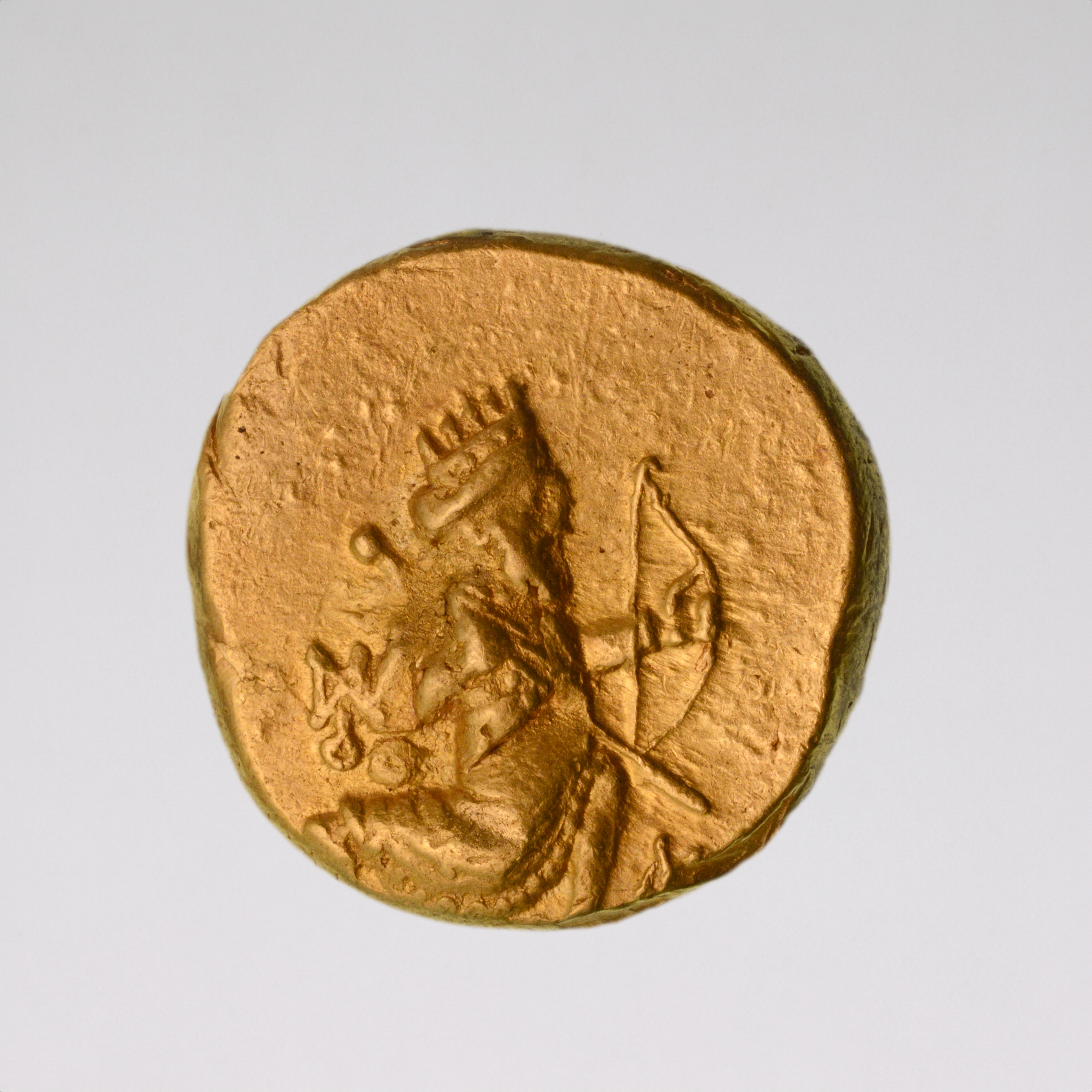
Our journey begins around 450 BC in ancient Persia, where a stater coin, weighing 8 grams, takes us to the reign of King Darius or King Xerxes. In a time before coins became perfectly round, this stater holds the image of a king proudly bearing a bow and spear. Its irregular, peanut-like shape reflects a world still shaping the foundations of monetary systems. It’s not just a piece of gold—it’s a symbol of Persian dominance, a "proto-coin" that predates modern standards and carried the immense power of the ancient empire.

The Kingdom of Macedon – Echoes of Alexander the Great

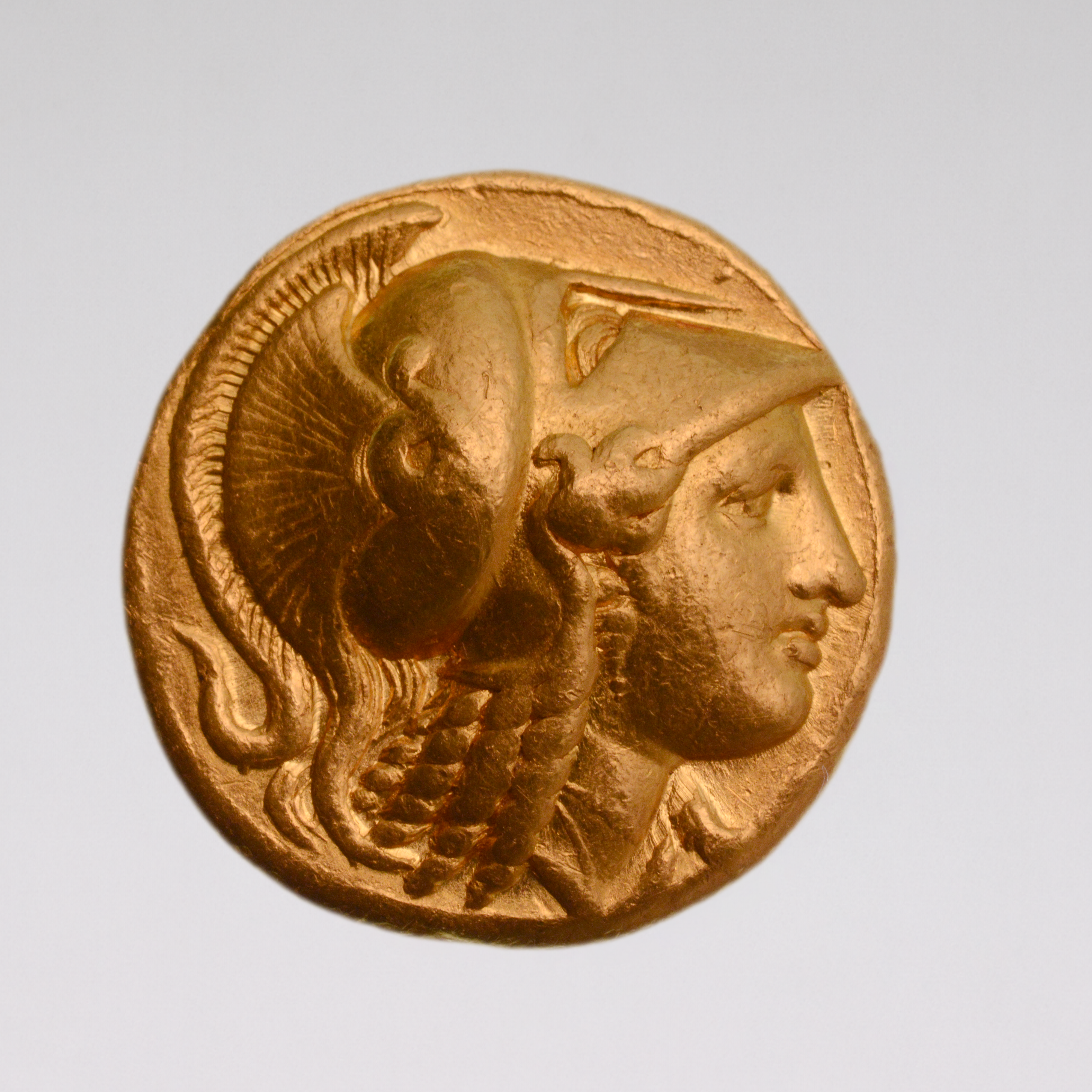
Travel forward to 330 BC, where the grandeur of Alexander the Great’s reign is immortalized in a stunning double-stater. At 17.2 grams, it features Athena, the goddess of war, her helmet raised to signal a rare time of peace. Flip the coin, and you’ll see Nike, the goddess of victory, whose wings represent triumph rather than religious iconography. This coin, bearing the inscription of "The Great King Alexander" in Greek, serves as a reminder of the vast empire Alexander built, where war and peace were two sides of the same story.
The Kingdom of Macedon – Echoes of Alexander the Great

Travel forward to 330 BC, where the grandeur of Alexander the Great’s reign is immortalized in a stunning double-stater. At 17.2 grams, it features Athena, the goddess of war, her helmet raised to signal a rare time of peace. Flip the coin, and you’ll see Nike, the goddess of victory, whose wings represent triumph rather than religious iconography. This coin, bearing the inscription of "The Great King Alexander" in Greek, serves as a reminder of the vast empire Alexander built, where war and peace were two sides of the same story.
Macedon Alexander III the Great
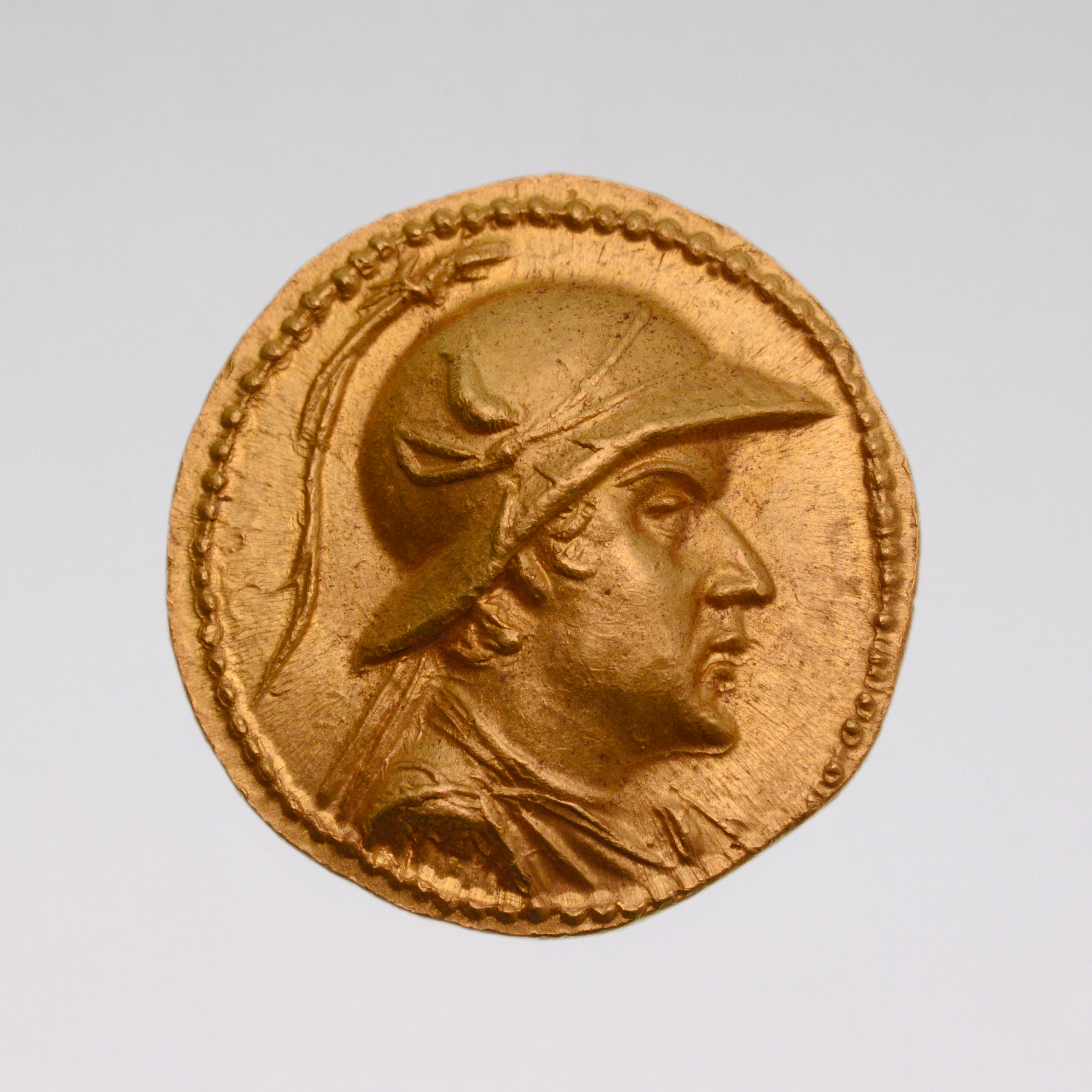
Greco-Bactria Eucratides I

Bactria – Warriors of the Silk Road

As we journey further east to Bactria (modern-day Afghanistan), circa 160 BC, we encounter a coin that reflects the fierce military legacy of King Eucratides I. The stater, weighing 8.5 grams, captures the king in a royal helmet adorned with bull’s horns—a symbol of his power. On the reverse, the twin brothers Castor and Pollux ride into battle, embodying the strength and unity of the Bactrian empire. This rare and iconic coin is one of the finest examples of ancient Greek numismatics, a coveted artifact from the edges of the Greek world, where east met west in both trade and conquest.

Byzantium – The First Portrait of Christ

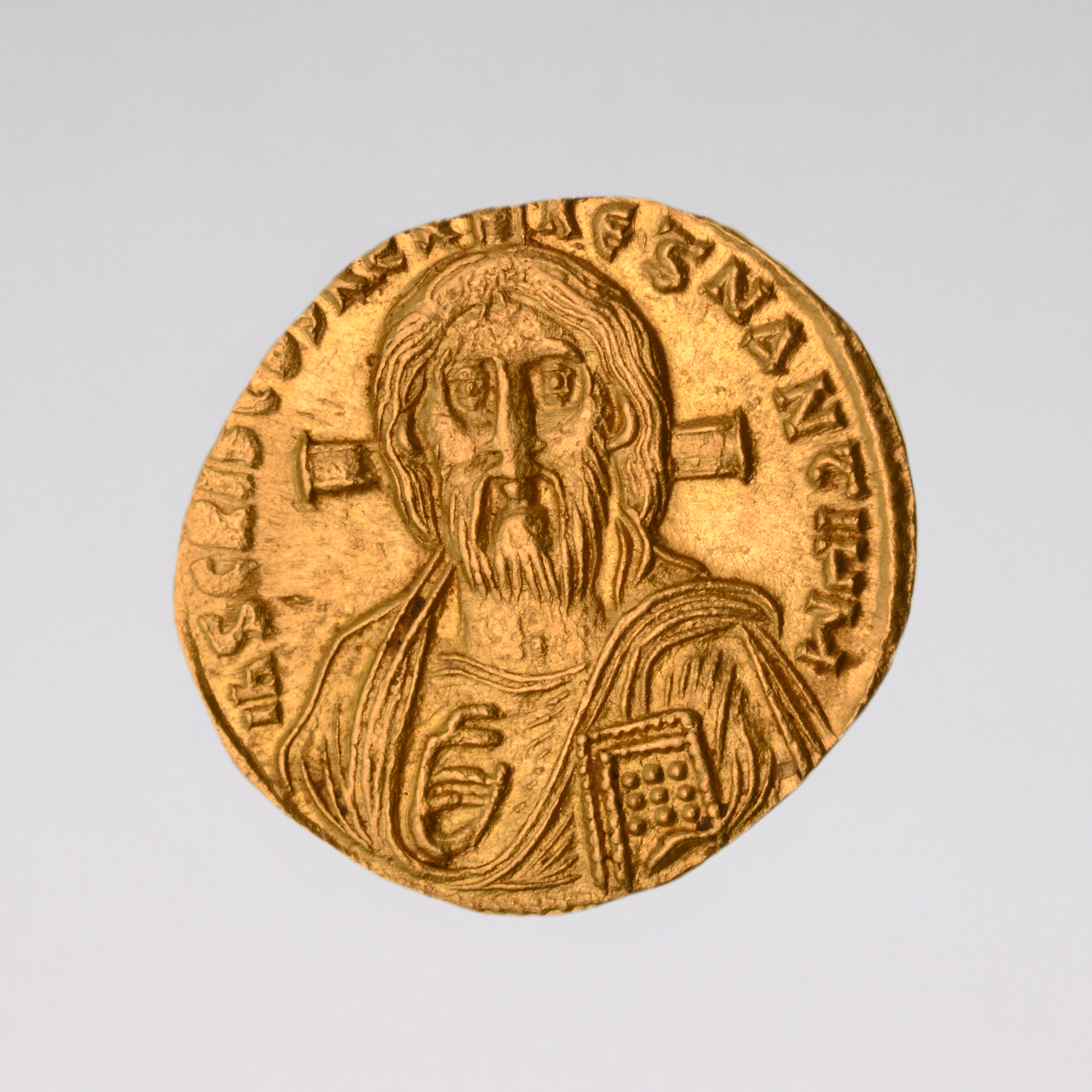
In the bustling city of Constantinople, circa 690 AD, we find one of the earliest known depictions of Christ on a coin. Issued under the rule of Emperor Justinian II, this coin, preserved in mint condition, bridges the ancient world and the dawn of Byzantine Christianity. The reverse features the emperor himself, reflecting the empire’s deep connection to both political and religious power. Its exceptional state makes it an unparalleled piece of history, untouched by time and circulation.
Byzantinum Justinian II

China – The First Gold Currency

Finally, we journey to ancient China’s Warring States period, around 400 BC, where the first structured gold currency emerged. The "Gold Cube Money" from Hubei Province is a small but mighty example of early Chinese innovation. Carefully cut from gold bars, this 9-gram piece is stamped with the characters “Yuan Ying,” marking its precise weight and value. This coin is a testament to the early sophistication of Chinese monetary systems, a precursor to the vast Silk Road trade that would later define the region.

A Journey Through Time

Each of these coins carries a unique story, and through the use of cutting-edge technology, you can now appreciate the fine details and historical significance of these pieces as never before. Whether it’s the divine figures from ancient Greece, the early depictions of Buddha, or the powerful imagery from the Gupta dynasty, each coin offers a window into a past civilization.
© Copyright 2024-2025 - David Feldman SA - All Rights Reserved
chevron-downchevron-right-circle
linkedin facebook pinterest youtube rss twitter instagram facebook-blank rss-blank linkedin-blank pinterest youtube twitter instagram